Fresh, Frozen or Canned Tomatoes: What Changes in the Pot?
Fresh, frozen or canned tomatoes change a sauce’s texture, liquid and timing. Choose the form that fits your dish and the time you have.
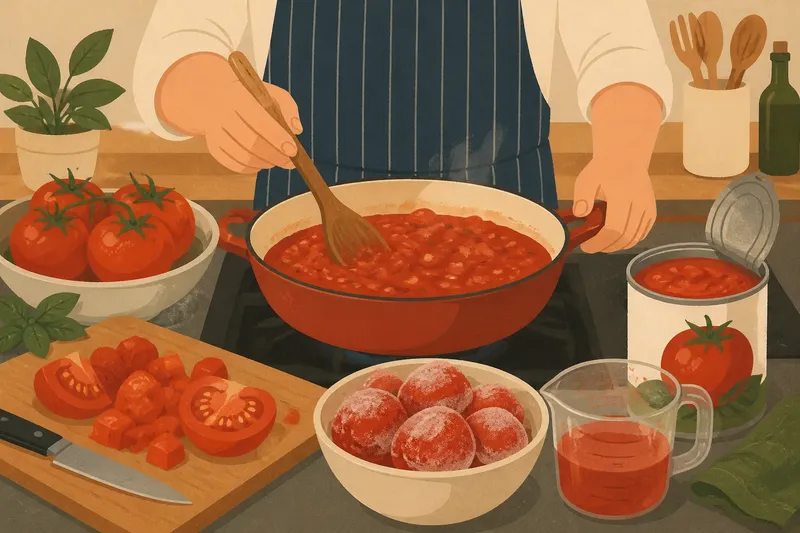
Fresh, frozen or canned tomatoes can send the same sauce in different directions before you add a single herb. A fresh tomato may soften into distinct pieces; a canned one brings its packed liquid with it; a frozen tomato can release water as it thaws and cooks. The useful question is not which form wins, but what the pot needs and when you plan to serve it.
Think of tomato choice as a small kitchen routine rather than a rule. At the start of the week, check what is ripe and what is already in the cupboard. Before cooking, decide whether the sauce should stay bright and textured, or cook down into something cohesive. Then adjust the order of cooking to suit the tomato itself.
What should you check before choosing tomatoes?
Begin with the dish, not the produce aisle. A quick sauce for pasta may benefit from fresh flavor and a little variation in texture. A long-simmered stew can accommodate canned tomatoes and their liquid. For a smooth sauce, the starting texture matters less than how much time you can give it to soften and reduce.
- Desired texture: Decide whether you want visible pieces, a soft chunky sauce or a smooth finish.
- Available time: Fresh tomatoes may need coring and chopping; frozen ones may need thawing or extra cooking time to shed liquid.
- Moisture in the recipe: Consider whether broth, wine or other watery ingredients are already going into the pot.
- Ripeness and condition: Use fresh tomatoes that smell inviting and feel sound, not those that are moldy or badly damaged.
- What is on hand: A can in the pantry may be more useful than a fresh tomato that is firm and flavorless.
These checks do not dictate a single answer. They help you anticipate what the tomato will contribute, so the sauce can be adjusted as it cooks rather than rescued at the end.
How do fresh tomatoes behave in a sauce?
Fresh tomatoes vary with type and ripeness. A ripe, juicy tomato releases liquid readily and softens into tender pieces. A firmer tomato may hold its shape longer and taste less rounded until it has cooked. Peeling is optional for many sauces; the skin may remain noticeable, especially in a quick preparation that is not blended.
For a short-cooked sauce, chop the tomatoes and let them cook until their juices mingle with the aromatics. Add salt as they soften, then taste before adding more liquid. If the pan seems watery, leave it uncovered so steam can escape. If the tomatoes are dense and the sauce catches, add a small splash of water rather than pouring in a large amount at once.
For a smoother result, cook fresh tomatoes until fully tender and use an immersion blender, or pass the sauce through a food mill if you want to separate out much of the skin and seeds. Those tools change texture, not the tomato’s underlying flavor. A food mill can be particularly useful when you want a smooth sauce without peeling each tomato first.
What do canned tomatoes bring to the pot?
Canned tomatoes offer a consistent starting point and arrive with packing liquid. Whole peeled tomatoes are easy to crush by hand or with a spoon as they cook. Diced tomatoes keep more defined pieces, while crushed tomatoes begin closer to a thick, coarse sauce. The liquid in the can is part of the ingredient, though you may not need all of it for every dish.
For a sauce that should cling to pasta, add the tomatoes and some of their liquid, then simmer uncovered until the texture suits you. If the sauce is already loose from broth or vegetables, hold back some packing liquid and add it only if needed. For a soup or braise, using the whole can may make more sense because the extra liquid becomes part of the cooking base.
Canned tomatoes are convenient when fresh ones are out of season, underripe or simply unavailable. They are also useful when you want the same general texture each time. Check the can for salt and any added ingredients, then season the pot accordingly; labels and manufacturer directions govern any storage or handling questions.
How do frozen tomatoes affect timing and texture?
Freezing breaks down some of a tomato’s structure. After thawing, it is usually softer and may give off more liquid than a fresh tomato. That makes frozen tomatoes a natural fit for sauces that will be cooked down, blended or used in soups, rather than preparations that rely on crisp, distinct tomato pieces.
If the tomatoes are frozen whole, thaw them in the refrigerator in a covered container or add them directly to a pot that can accommodate the extra cooking time. As they soften, their skins may loosen and slip away easily. Let excess liquid cook off uncovered, or drain some before adding them if the recipe has little room for additional moisture.
Frozen tomatoes can preserve a useful supply from a time when ripe tomatoes were plentiful. Their texture after thawing is not a flaw to correct in every dish; it is simply a reason to choose a cooked preparation and plan for the liquid they release.
When should you add liquid or change the heat?
Watch the sauce rather than following a fixed timer. A watery surface and loose consistency suggest that uncovered cooking may help. A thick sauce that sticks to the bottom calls for lower heat, more frequent stirring or a modest splash of water. A lid slows evaporation, so use it when you want the sauce to stay looser or to soften ingredients without much reduction.
Imagine you have chopped ripe fresh tomatoes for a quick pasta sauce, but they release more juice than expected. You could keep the pan uncovered and stir occasionally while the pasta cooks; the visible pool should gradually lessen, leaving a more concentrated sauce. If the pasta is ready first, turn off the heat and cover the pan loosely rather than continuing to reduce it until the tomato pieces disappear.
For a sauce built from canned or thawed tomatoes, begin with less added broth or water than the recipe suggests, then add it as the pot needs it. This keeps the tomato’s own liquid from making the finished dish thinner than intended.
Which tomato form suits your sauce? What else do cooks ask?
Can fresh tomatoes replace canned tomatoes?
Yes, particularly in a cooked sauce, but fresh tomatoes can vary more in juiciness and ripeness. Chop them, cook until tender, and adjust the reduction by watching the pot rather than assuming the same amount of liquid will be needed.
Should canned tomato liquid go into the sauce?
Often, but not always. Use it when the dish needs liquid or will simmer long enough to thicken; hold some back when other ingredients already make the sauce loose.
Are frozen tomatoes suitable for a smooth sauce?
They can be, because thawed tomatoes soften readily during cooking. Simmer off extra liquid, then blend or use a food mill if you want a smoother finish.
Which form works best for a quick sauce?
The best choice depends on what is ready to cook: canned tomatoes are already prepared, while ripe fresh tomatoes can make a quick, lively sauce with little simmering. Frozen tomatoes may suit a quick meal if they are already thawed, but their released liquid can require extra reduction.
How can this become a useful kitchen routine?
At the start of the week, look at the tomatoes you have and match them to likely meals. Set aside ripe fresh tomatoes for a short-cooked sauce or a dish where their texture can stay visible. Keep canned tomatoes available for a pot that needs a dependable cooked base. If you have frozen tomatoes, plan to use them in a sauce or soup where softness and extra liquid are easy to accommodate.
On cooking day, make one final check: how much moisture is already in the pot, how smooth should the sauce become, and how long can it cook? Fresh, frozen or canned tomatoes can all make a satisfying sauce when those choices guide the method. For fresh, frozen or canned tomatoes, the practical distinction is not rank but readiness: choose the form whose texture, liquid and preparation fit the meal you are actually making.